
Fake Wedgewood Polls Exposed: 3 Simple Steps to Judge a Poll’s Credibility
Oct 26, 2026Byline: American Pulse Staff/Olson Strategies Staff
“They didn’t poll a single person. They made it up—and only came clean after getting caught.”
— Dustin Olson, Pollster
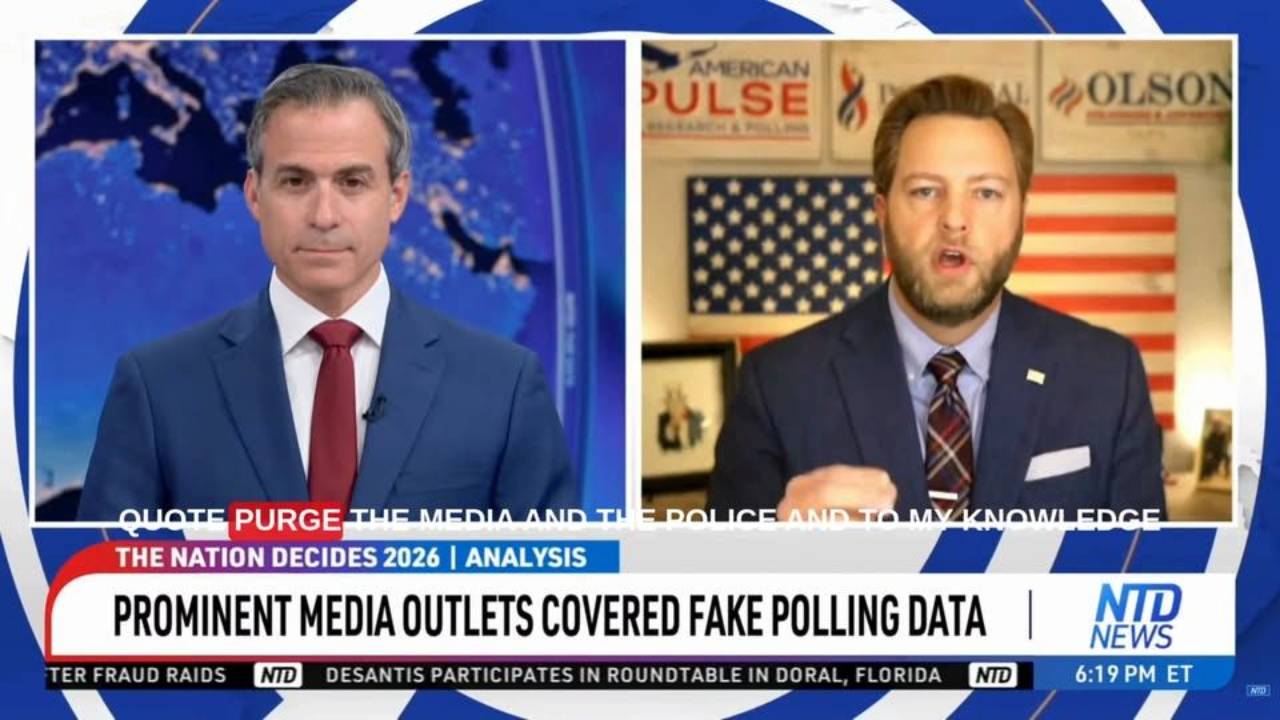
SUMMARY: Pollster and political strategist Dustin Olson of American Pulse Research & Polling joined anchor Cary Dunst on NTD Evening News to break down the scandal involving the fake and fraudulent Wedgewood Polls, political media’s addiction to polling headlines, and what reporters and voters should examine before trusting any public poll.
Key Takeaways
- Fake Wedgewood Polls: Wedgewood admitted that all but one of its political surveys were fabricated, raising concerns about the credibility of media reporting of polling.
- Michigan Senate Polling: Olson pointed out that some current polling shows discrepancies in respondents’ recalled 2024 presidential votes, meaning samples have too many Harris voters, which is affecting polling averages.
- Polling Credibility: Olson recommends examining methodology, toplines, crosstabs, and previous presidential-vote recall before trusting a public poll.
- Polling Methods: 100% paid online panels or 100% text-only surveys can produce unrepresentative samples, according to Olson.
Dustin Olson, lead pollster at American Pulse Research & Polling/Managing Partner at Olson Strategies, joined Evening News on NTD to discuss the fabricated Wedgewood polls, Michigan Senate polling, and the credibility of public opinion research ahead of the 2026 midterm elections.
Fake Wedgewood Polls and the Credibility of Political Research
Last week, Wedgewood admitted that all but one of its political surveys were fabricated. Its fake polling had already been reported by prominent media organizations and entered into polling databases as legitimate data.
Olson’s reaction as a professional pollster was blunt:
“They didn’t poll a single person. They just made stuff up—and they only came clean when they got caught.”
He rejected fake firm Wedgewood’s claim that the project was merely a “social experiment,” arguing that fake polling damages confidence in the political process, legitimate public-opinion research, and muffles the voice of the American electorate.
Professional Research vs. Drive-By Media Pollsters
The conversation also examined the difference between professional pollsters conducting internal research for campaigns, companies, and organizations—and what Olson calls “drive-by media pollsters.”
“Then you have what I would call the drive-by media pollsters—and a lot of them have university names associated with them. The only thing people are going to be deciding based on their poll is what headline to write.”
Professional pollsters and market researchers who primarily provide internal surveys for organizations face consequences when clients make expensive decisions based on inaccurate data. Drive-by media pollsters, on the other hand, can completely miss an election, even by a wide margin, but then go on to generate many more headlines during the next cycle, and face little to no accountability.
“There’s almost no scrutiny of that. There is no accountability for getting it wrong because they’re still going to make headlines in the next election cycle. If those of us who actually do internal surveys for clients provide information they use to make a big, expensive decision—and it’s completely off—that will have repercussions for us. The cheap media polls never get called on the carpet for that.”
Michigan Senate Polling and the 2024 Election Credibility Test
Olson also explained how outlier polls can be inserted into polling averages and create the appearance that a race has moved—even when the voters have not.
He pointed to recent Michigan polling that generated breathless headlines about Abdul El-Sayed “pulling ahead” in the U.S. Senate race, but the average moved only because one Suffolk University poll showing El-Sayed leading by 7 points had been added to the average while other surveys were still within a point or two.
But respondents in the same sample recalled Kamala Harris winning Michigan by 6 points in 2024—a state Donald Trump actually won.
Olson’s No. 1 credibility test:
“If they can’t get the last election right in the poll, don’t believe what they say about the next one.”
Another “Dewey Defeats Truman” Moment?
In the NTD appearance and a related interview for EWTN News Nightly on the global Catholic network, Olson also explained the impact of media polls over reliance on cheap methodologies like 100% paid online panels and 100% text-only surveys, and other factors affecting working-class and Republican survey nonresponse, and why Olson expects another public-polling miss on Election Day similar to the famous “Dewey Defeats Truman" newspaper headline in 1948. More on that later.
Olson's Outlook for the 2026 Midterm Elections
Olson also offered his outlook for control of Congress, saying Republicans are likely to retain the Senate while losing House seats—and likely the House majority—as redistricting blunts some of the possible congressional map shifts.
The conversation concluded with a preview of the major Michigan Senate debate between Republican Mike Rogers and Democrat Abdul El-Sayed.
Drawing on in-depth research into the background of the candidates in preparation for extensive survey research among Jewish voters, swing voters, and Democrats, Olson explained why El-Sayed’s own record of signing a 2012 statement endorsing the Muslim Brotherhood’s Egyptian President Mohamed Morsi, calling on him to “purge the media and police as soon as possible," deserves greater scrutiny.
How to Spot Bad Polls: Three Simple Steps
“Polling is a bit like crack cocaine for reporters. When they get a new poll (real, biased, or fake), it’s a pretty easy headline to write.”
Olson frequently offers the following advice to reporters—and the public—who want to separate credible polling from bad polling:
Three clicks or you’re out. The methodology, full toplines, crosstabs, sponsor, field dates, and interviewing methods, including which modes and what percentage of the sample they make up, should be easy to find.
If they hide the details or make them hard to find, throw it out.
Then find the question: “Who did you vote for in the last presidential election?”
It is one of the most important tools pollsters have developed for finding hidden Trump voters, shy Trump voters, working-class Republicans, and working-class voters who are less likely to answer surveys.
If they didn’t ask it, throw it out.
If they did ask it but their sample describes a fantasy version of the last election, throw it out.
Finally, examine how the interviews were collected. If a survey relies entirely on one cheap method as most media polls do—such as 100% paid online respondents (most public polls are) or 100% text messages—throw it out.
Olson compared 100% text-message-only polling to the historic polling failure behind the famous “Dewey Wins” headline moment:
“This is like 1948. Remember that photo of Truman holding up the newspaper: ‘Dewey Wins.’ Republicans happened to own landlines, so they oversurveyed Republicans. That’s what’s happening with text-message-only surveys [but for Democrats].”
Serious polling should reach voters in multiple ways, including real human-to-human conversations by telephone.
Thanks to anchor Cary Dunst and the entire NTD Evening News team for the thoughtful conversation.
Become a Political Trade Secrets Insider
For campaigns, advocacy organizations, companies, and public affairs teams, the lesson is clear: winning strategy starts with understanding what voters and audiences actually think, crafting a message to speak to that, and formulating a plan to execute on it.
American Pulse Research & Polling provides custom polling, multimodal surveys, public opinion research, market research, polling briefings, toplines, crosstabs, and strategic insights.
For organizations that need strategy and execution, Olson Strategies & Advertising provides campaign strategy, advertising, direct mail, fundraising support, voter-contact programs, and strategic messaging.
For deeper conversations about campaign mechanics, polling, political strategy and what really moves voters, readers can also like, follow and subscribe to Dustin Olson’s Political Trade Secrets podcast.
Your Guide On The Road To:
Being a Powerful Political Leader &
Reigniting American Patriotism!
Sign up to be a Political Trade Secrets Insider and Get Exclusive Stuff, like new strategic tools, inspiration, and classes delivered to your inbox.
We hate SPAM. We will never sell your information, for any reason.
